


Leadangel vs Cal.com: Which is Best For Lead Routing?
Stop losing revenue to slow follow-ups. While LeadAngel specializes in heavy-duty CRM data management for enterprise territories, Cal.com focuses on speed, converting inbound leads into booked meetings instantly. This guide compares LeadAngel vs. Cal.com to help you decide which lead routing engine is right for your sales team’s workflow.

Finding out that a hot lead just went cold because it sat in a stagnant inbox for three days is a special kind of frustration.
In a sales environment where minutes can determine if you close a deal or lose it to a faster competitor, manual handoffs are basically a leak in your revenue bucket. And most teams realize eventually that they need a solid lead routing software to keep things moving… but picking the right one is where it gets tricky.
Two names pop up often: LeadAngel and Cal.com.
On one hand, LeadAngel acts as a heavy-duty lead routing specialist, mostly helping large enterprise teams clean up messy CRM data and map out complex territories. Then there’s Cal.com, which focuses on speed by turning your inbound forms into instant meeting bookings.
Both platforms tackle the same core problem, but they do it from very different angles.
So which one is best for your sales team's specific needs?
This guide breaks down exactly how they stack up against each other. Let's look at how these two contenders actually handle your leads!
What is Lead Routing?
So first off, what is lead routing?
Lead routing is the process of automatically sending a new prospect to the right person on your sales team. So instead of letting a high-value lead sit in a digital pile waiting for someone to manually assign it, a lead routing system handles the handoff instantly based on rules you set up.
This matters because speed is everything in modern sales.
When you use automated lead routing, you significantly reduce your lead response time. And keep in mind that shorter wait times mean higher sales velocity, which translates to better conversion rates. After all, if a person has to wait all day for a callback, they probably won't be a lead for long.
Now, most companies use a few specific methods to keep things moving:
-
Round-robin: This gives every rep an equal turn, like dealing a deck of cards.
-
Territory-based: Leads go to specific reps based on where the prospect is located.
-
Rule-based: You set specific criteria, like company size or industry, to decide who gets the lead.
-
Skill-based: Prospects go to the person with the most expertise in a particular product or service.
Your team can spend less time looking at spreadsheets and more time actually talking to people by taking the guesswork out of the equation.
What is LeadAngel?
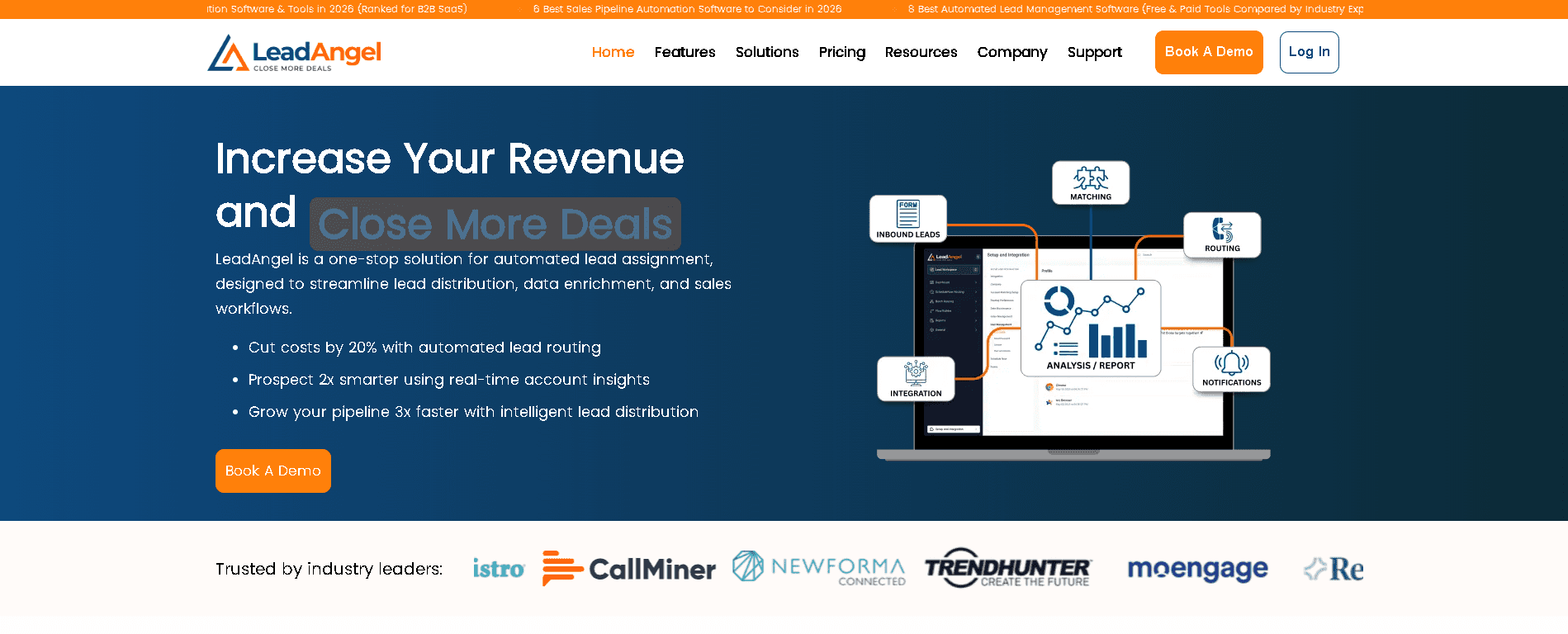
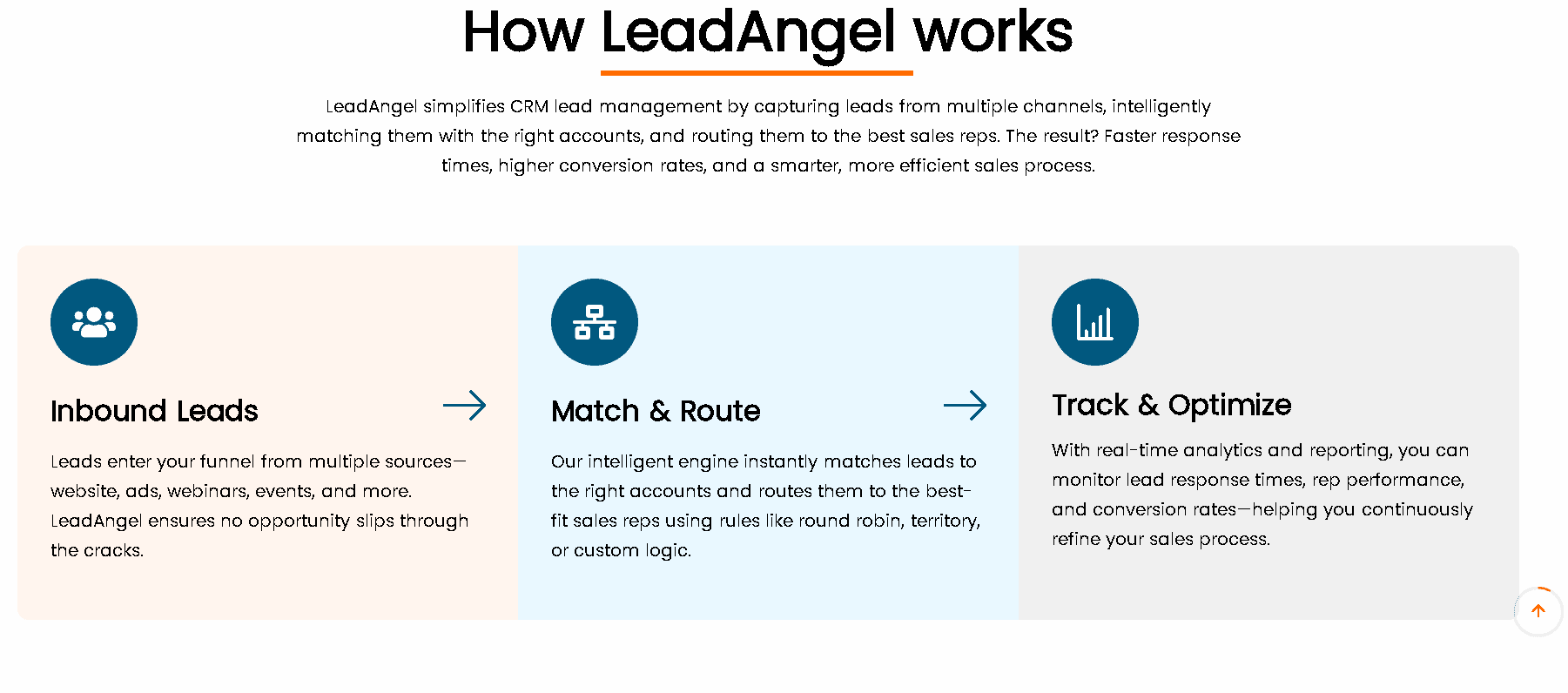
To put it simply, LeadAngel operates as a heavy-duty engine for B2B sales operations that need to move fast without breaking their data. It isn't just a simple switcher but also a sophisticated lead routing system designed to sit between your incoming traffic and your CRM to manage the who-goes-where of every single prospect.
For enterprise and mid-market teams dealing with a massive volume of inbound leads, it acts like a digital air traffic controller, making sure no two reps are fighting over the same person. The platform specializes in solving the messy data problems that usually haunt larger organizations.
And one of its main selling points is a proprietary lead-to-account matching algorithm. This tool uses “fuzzy matching” to link new leads to existing accounts in your database, even if someone enters “IBM” while your record says “International Business Machines”.
Also, the software prevents the dreaded “lead blackhole” where prospects sit unread because nobody knows who owns them by identifying these connections instantly.
Efficiency is the name of the game here, which is why LeadAngel focuses heavily on CRM deduplication. It scans for repeat entries in real-time, merging duplicates into a single, enriched profile so your sales reps have the full context before they ever pick up the phone.
It handles complex territory routing and performance-based weighting, as well. So if you have certain reps who specialize in specific industries or regions, the system can automatically prioritize them based on the rules your RevOps team sets up.
While many businesses look for alternatives to LeadAngel software to find simpler tools, this platform stays popular because it tackles the technical heavy lifting of lead management. It also integrates natively with big players like Salesforce, HubSpot, and Microsoft Dynamics 365, turning standard lead routing into a much more precise science.
LeadAngel’s aim is to shave minutes off response times, which often makes the difference between a closed deal and a missed opportunity, and it does that by automating these repetitive tasks and enforcing lead routing best practices.
What is Cal.com?
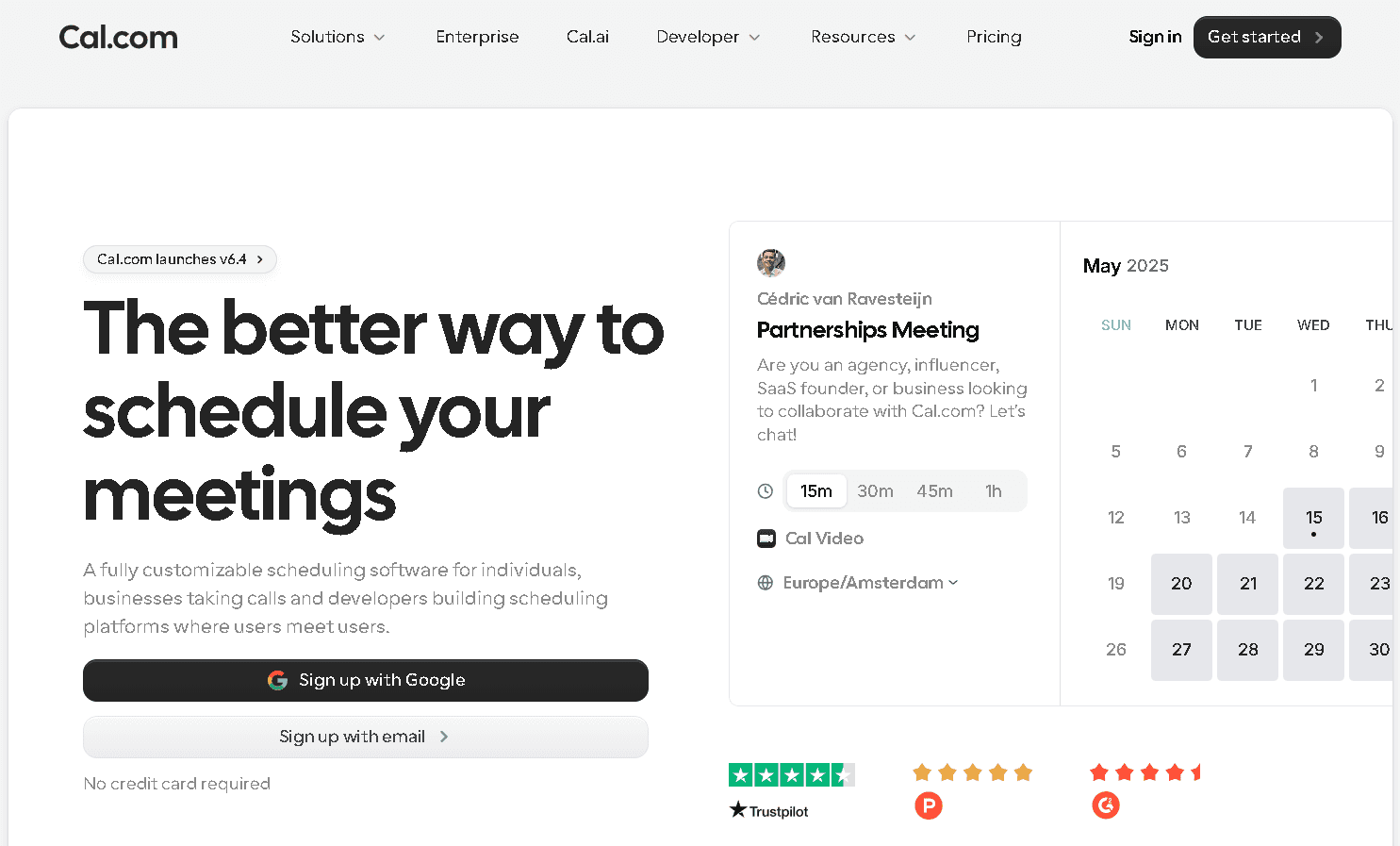
Switching gears, we have Cal.com.
Now, this platform takes a fresh approach by focusing on the speed-to-meeting aspect of the sales cycle. It functions as a modern meeting infrastructure that combines automated scheduling with native lead routing tools.
While some platforms feel like a collection of backend logic, Cal.com centers the user experience with a beautiful UI that keeps things clean for both your team and your prospects.
The standout feature here is Routing Forms. This setup allows you to ask qualifying questions right when a lead lands on your site. Then based on their answers, conditional logic kicks in to send that person exactly where they need to go.
So if a high-value prospect fills out your form, the system identifies them and lets them book a meeting with the right sales rep on the spot. As a result, it effectively removes the wait time between “I'm interested” and “Let's talk.”
For teams that need a reliable lead routing system without a steep learning curve, Cal.com simplifies the handoff process. You get features like round-robin scheduling to distribute meetings fairly and deep integrations with platforms like Salesforce and HubSpot.
Essentially, it bridges the gap between marketing lead routing and actual sales conversations. Everything happens in one smooth flow, so you don't have to worry about leads going cold while they wait for a manual follow-up email.
This end-to-end style makes it a strong contender for sales, marketing, and customer success teams that want a more cohesive tool. What’s great about it is that instead of jumping between a separate leadrouter and a basic calendar app, what you get here is a unified platform that handles the qualification and the booking simultaneously.
In short, it’s built for revenue teams that want to spend less time managing software and more time actually talking to customers.
LeadAngel vs Cal.com - Feature Comparison
Since both platforms offer powerful lead routing tools, choosing between them usually comes down to whether you need a deep data management engine or a fast, meeting-focused workflow.
If you’re specifically looking for lead routing software that can handle complex, rule-based logic for enterprise teams, LeadAngel is a solid contender. However, if your goal is to connect lead form routing HubSpot users love directly to a rep's calendar, then Cal.com’s end-to-end approach is hard to beat.
Here’s a quick breakdown of how these two stack up against each other:
Comparison Table
| Feature | LeadAngel | Cal.com |
|---|---|---|
| Lead Routing | ✅ Rule-based routing | ✅ Routing Forms |
| Round-Robin Assignment | ✅ Yes | ✅ Yes |
| CRM Integration | ✅ Salesforce, HubSpot | ✅ HubSpot, Salesforce & more |
| HubSpot Lead Routing | ✅ Yes | ✅ Yes |
| Automated Lead Routing | ✅ Yes | ✅ Yes |
| Scheduling Built-in | ❌ No | ✅ Yes |
| Transparent Pricing | ❌ Quote-based | ✅ Public pricing |
| Free Plan | ❌ No | ✅ Yes |
| Self-Hosting Option | ❌ No | ❌ No |
| Ease of Setup | Moderate | Easy |
Lead Routing Capabilities - A Deeper Look
Next, let’s get into the weeds of how these two actually handle your incoming traffic. While both systems claim the title of lead routing software, they go about it in very different ways.
LeadAngel's Lead Routing Approach
LeadAngel functions primarily as a high-powered leadrouter for teams that have to manage a massive web of complex rules. It relies heavily on rule-based logic and fuzzy matching to make sure data stays clean.
For example, if your CRM is a bit of a mess with duplicate entries, its deduplication feature steps in to prevent the same lead from being assigned to two different people.
This lead routing system is a favorite for Account-Based Marketing (ABM) teams because of its lead-to-account matching. It can look at a new prospect, realize they belong to a massive enterprise account you're already targeting, and route them to the specific rep owning that relationship.
It also handles territory-based routing with ease. If you have hundreds of reps divided by zip codes or specific business units, automated lead routing helps keep those boundaries enforced without manual oversight.
It’s a backend powerhouse built for those with large, complex CRM databases that need strict order.
Cal.com's Lead Routing Approach
On the other hand, Cal.com takes a more direct, user-facing path to lead routing. Instead of just moving a name around in the background, it uses Routing Forms to qualify prospects the second they engage with your site.
You can set up custom questions, like company size or budget, and let the system decide where that lead goes. Because it uses conditional logic, the prospect's answers determine their path in real-time.
This is where the magic happens for marketing lead routing.
If a lead is qualified, they don't just get a “we'll call you” message but are immediately shown a booking page. Cal.com has round-robin and collective scheduling baked right into this flow, so a meeting gets booked instantly with the right rep or team.
This creates a seamless lead form routing HubSpot users find incredibly efficient.
And because of the native HubSpot lead routing and Salesforce integrations, the data is pushed straight into your CRM alongside a confirmed calendar event.
Cal.com effectively closes the gap between the initial interest and the actual discovery call. A routed lead gets a meeting on the books immediately, which is a massive win for your conversion rates.
Certainly, it’s a lead routing tool designed for revenue teams that want to turn interest into a conversation before the prospect even leaves the page.
HubSpot Integration - LeadAngel vs Cal.com
If your team lives and breathes in HubSpot, seeing how these tools actually talk to your CRM is the next logical step.
While both LeadAngel and Cal.com offer a solid lead routing HubSpot connection, they handle the data exchange with very different end goals in mind. One focuses on the plumbing of your database, while the other prioritizes getting a meeting on the books.
LeadAngel functions by syncing lead data directly into your HubSpot pipelines and applying a specific lead routing system to clean things up. It works behind the scenes to merge records and ensure that the HubSpot lead routing logic you’ve set up actually sticks.
It’s particularly useful if you rely on complex HubSpot scoring to decide which rep gets which lead. Basically, it takes the lead data, processes it according to your rules, and updates the contact owner in HubSpot so your sales team knows who to call next.
As for Cal.com, it takes a much more active approach to lead form routing HubSpot users find refreshing. It integrates directly into your HubSpot forms and workflows to trigger an immediate booking, instead of just assigning an owner and hoping for a follow-up.
The way it works is that when a prospect fills out a form, the system checks their details against your HubSpot records, qualifies them, and presents a booking page tied to the correct rep's availability.
This removes the manual handoff entirely.
Because Cal.com features such a nice UI, the transition from filling out a form to picking a time slot feels like one continuous, professional interaction for the customer. The meeting is automatically created as an activity in HubSpot, so your records stay updated without anyone lifting a finger.
For HubSpot-heavy teams that want to eliminate friction, Cal.com is often the better fit.
That’s because it doesn't just move data but also moves the needle on revenue by converting interest into a scheduled call right when the prospect is most engaged. While LeadAngel is great for managing the backend of a massive database, Cal.com excels at closing the gap between a marketing lead and a sales conversation.
If your goal is speed and a better user experience, having your automated lead routing lead directly to a confirmed meeting is a massive competitive advantage.
Pricing Comparison
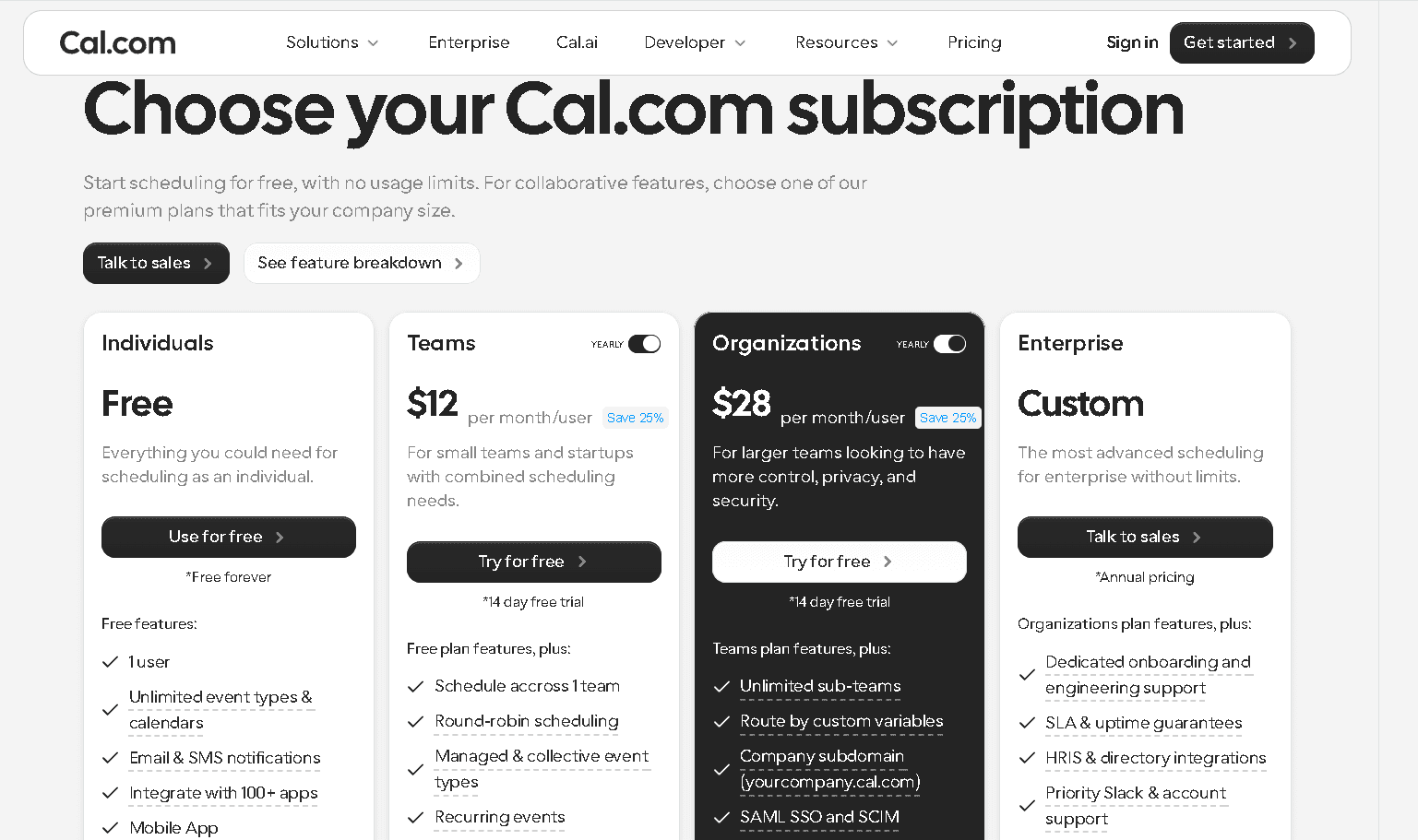
Checking the price tag is often the final hurdle before committing to a new tool. There’s a massive difference in how these two platforms approach their billing, and it really dictates how quickly you can get up and running.
Let’s take a look.
| LeadAngel | Cal.com | |
|---|---|---|
| Free Plan | ❌ No | ✅ Yes |
| Pricing Model | Quote-based | Per seat / usage |
| Transparent Pricing | ❌ No | ✅ Yes |
| Self-Hosting Option | ❌ No | ❌ No |
| Entry-Level Paid Plan | On request | Publicly listed |
Lead Routing Best Practices
It’s important to remember that setting up a solid strategy for your incoming traffic is about more than just picking a tool. It also takes a bit of planning to make sure your team is actually set up for success.
That said, following these lead routing best practices helps you stay organized while your pipeline grows:
-
Segment by logic that makes sense: Match your leads to reps based on specific criteria like territory, product line, or even deal size. This puts the right expert in front of the prospect from the start.
-
Balance the load evenly: Use round-robin assignment to distribute leads fairly across the team. Doing this keeps your top performers from getting overwhelmed and prevents newer reps from sitting idle.
-
Speed up your response times: Relying on automated lead routing reduces the time it takes for a lead to get from your website to a real person. And wuick action often determines who wins the deal.
-
Sync everything with your CRM: Keep your routing rules tightly aligned with your database to avoid data gaps. You want your lead records to show exactly who owns the relationship without any manual digging.
-
Test your system as you scale: Audit and test your routing logic regularly. What works for five reps might break when you have fifty, so stay on top of your internal workflows.
-
Bridge the gap to meetings: Connect your routing directly to a booking page to stop prospects from dropping off. Yes, getting a lead assigned is good, but getting a meeting on the calendar is what actually drives revenue.
You can handle the qualification and the scheduling in one go by using a modern lead routing tool like Cal.com. It makes the whole process feel much more natural for the person on the other side of the screen. Because instead of making them wait for a follow-up, you give them the chance to pick a time that works for them right away.
Keeping these points in mind will help you build a much more efficient sales engine.
Who Should Use LeadAngel?
LeadAngel finds its home in organizations where the sales back-office is massive and data hygiene is the primary concern.
Sales operations teams that live for deep, CRM-native workflows will appreciate how it locks into their existing setup to handle the technical heavy lifting. If your workday revolves around maintaining a pristine database and you need a high-performance leadrouter to enforce strict data rules, this is a strong candidate for your stack.
Moreover, large enterprises with highly specific territory mapping or account-based routing requirements often gravitate toward this lead routing system. It excels in environments where a new lead must be perfectly matched to an existing account to keep ABM strategies on track.
Organizations heavily invested in Salesforce infrastructure tend to find the deep integration helpful for managing complex sales cycles, as well.
You might choose this route if your team prioritizes lead deduplication and lead-to-account matching above the actual scheduling experience. It serves teams that need to resolve “leaking leads” caused by manual sorting errors or disconnected routing across different business units.
And if your main goal is to stop revenue from walking out the door due to uncontacted leads in a messy CRM, then LeadAngel provides the visibility to step in and fix those gaps.
Who Should Use Cal.com?
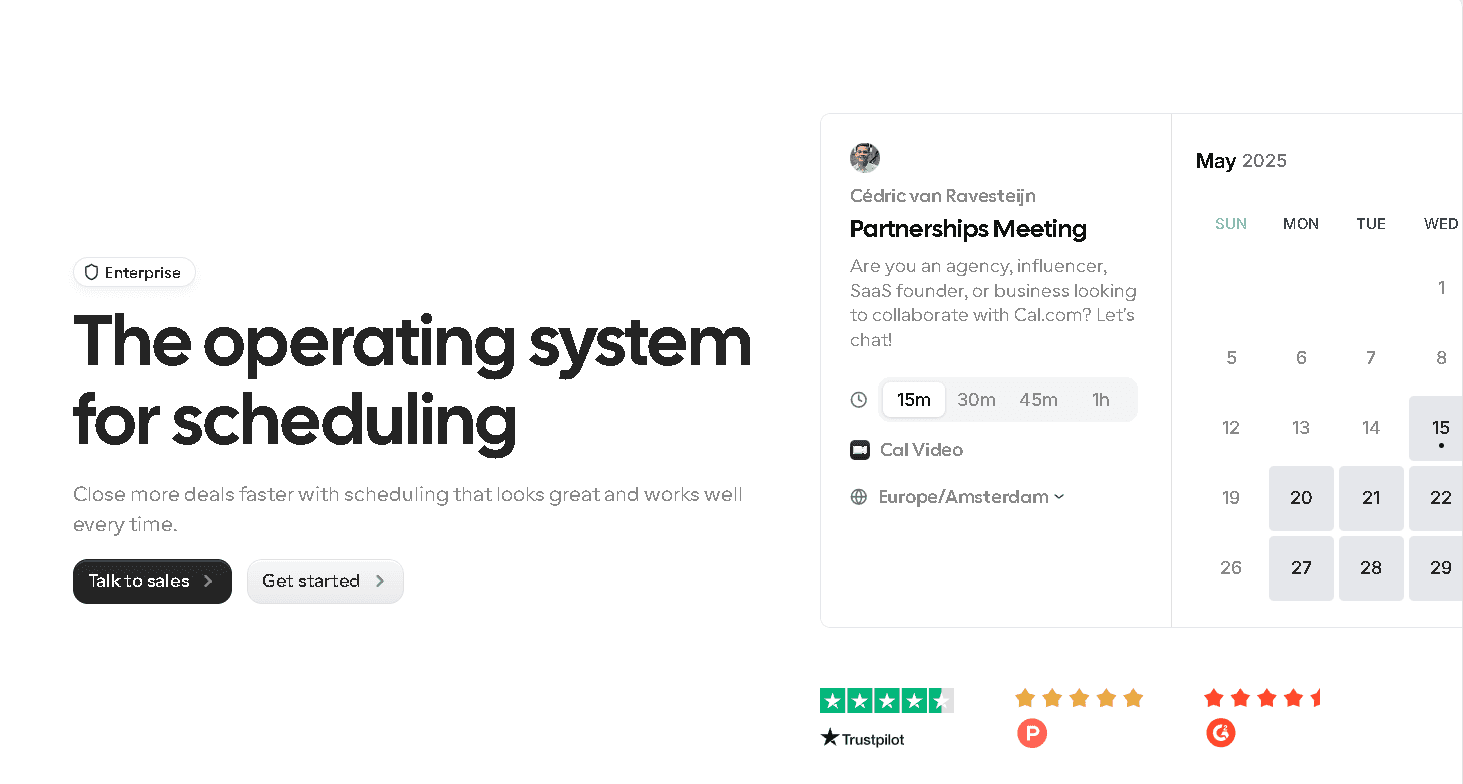
Cal.com is the go-to for sales and marketing teams that want to consolidate lead routing and meeting scheduling into a single, cohesive platform. It works as a modern lead routing tool for revenue-focused groups that prefer action over manual administration.
Is your main objective to turn a prospect into a booked meeting as fast as possible?
Well, this platform handles that natively without needing extra tools or awkward handoffs.
Startups and rapidly scaling businesses find the transparent, public pricing particularly helpful. That means you can skip the long sales calls and evaluate costs instantly, which is a major draw for teams that need to move quickly.
It also has a good-looking UI, making the setup process feel straightforward, even if you don't have a dedicated technical team to manage a complex lead routing system.
Teams already using HubSpot forms get a massive productivity boost here. Cal.com allows you to set up a flow where a lead goes from form submission to a confirmed meeting automatically.
This native lead form routing HubSpot integration removes the friction that usually leads to prospects dropping off. It’s an ideal choice for anyone looking for alternatives to LeadAngel software that prioritize a streamlined, end-to-end user experience.
Frequently Asked Questions (FAQ)
What is the difference between LeadAngel and Cal.com?
LeadAngel is a dedicated lead management platform that handles complex, data-heavy CRM workflows. Cal.com provides a modern scheduling infrastructure with built-in routing forms to take leads from qualification directly to a booked meeting in one smooth flow.
Does Cal.com support lead routing?
Yes, Cal.com features native Routing Forms that qualify inbound leads using custom questions. The system then automatically routes them to the correct rep or team booking page based on their specific answers.
Which is better for HubSpot lead routing - LeadAngel or Cal.com?
Both tools offer native HubSpot integrations to keep your data synced. Cal.com is often the better choice for revenue teams because it connects that routing directly to an automated meeting booking within your existing HubSpot workflows.
Is Cal.com free?
Cal.com offers a free plan that includes core scheduling and routing features. You can upgrade to paid plans to unlock more advanced routing logic, additional team features, and deeper integrations.
What are the best alternatives to LeadAngel software?
Top alternatives to LeadAngel software include Cal.com, Chili Piper, and LeanData. Cal.com is a standout pick for teams that want both lead routing and scheduling functionality without managing two separate, expensive tools.
What is automated lead routing?
Automated lead routing uses predefined digital rules to assign new prospects to the right sales rep instantly without manual work. This process significantly improves your speed-to-lead and helps boost overall conversion rates.
Can Cal.com replace LeadAngel?
For most modern sales teams, Cal.com is a complete replacement that adds scheduling functionality LeadAngel lacks. Teams with extremely technical, legacy CRM-based routing rules might still find LeadAngel's specialized management features necessary.
Final Verdict - LeadAngel vs Cal.com
Choosing between these two depends on your team's biggest priority: untangling complex data or booking meetings instantly.
LeadAngel is a heavy-duty lead routing system built to manage high-stakes routing complexity and deep CRM data hygiene. It excels for enterprises that need to navigate intricate territory mapping, massive lead deduplication, and precise account-based routing.
If your primary goal is bringing strict order to a messy database, LeadAngel provides the specialized control your sales operations team needs.
Then we have Cal.comthat takes the lead when you prioritize speed and revenue outcomes. It focuses on turning a prospect into a booked meeting as fast as humanly possible through its automated lead routing and integrated scheduling.
With its UI, transparent pricing, and effortless setup, it removes the technical barriers that often slow down your sales velocity. The native HubSpot lead routing flow is a major win here, as it qualifies prospects and gets them on your calendar in one continuous motion.
For most modern sales teams, Cal.com delivers significantly more practical value out of the box.
You get a combined routing and booking solution that keeps your pipeline moving without hidden costs or long, drawn-out sales cycles. It simplifies your tech stack while providing a much better experience for your prospects.
And if you want to stop chasing leads and start talking to them, moving to a system designed for the way people actually buy today is the way to go.
Ready to see it in action? Try Cal.com for free today and turn your lead forms into confirmed meetings.